Are You A Trusted Source of Wisdom?

Content Curation

Advisor Why

Content Curation

In this blog I curate articles from around the world because there’s no sense in reinventing the wheel. There is no shortage of incredible content available for advisors that will help them achieve the big three…
  • amplify their value
  • control how that value is perceived 
  • maximize their relevance
What I do in this blog is simplify the process for finding that information. I make it categorically available for advisors so they can simplify their lives.
Read the article below and the notes that follow to add tangible advisor alpha to your business.

Curated Article

As an information scientist, one of the most depressing aspects of modern social media is the way in which it is reshaping our global society to focus on the what, rather than the why. From the sciences to the humanities to the arts, the underpinning of the scholarly knowledge that advances our collective society is the understanding of why the world is the way it is. Documenting the “what,” the state of the world, is a necessary and important component of that process, but without the synthesis of those observations into the “why” that describes how they came to be and explains their outcome, we can never truly understand our world. This raises the question of how to restore the “why” in a social media world that teaches us that all that matters is the “what.”

The social media revolution has turned everyone with a smartphone into a realtime embedded reporter, live chronicling their own lives and events they experience and commenting on events happening elsewhere across the world. When journalists and tech experts start seeing a strange survey from Facebook pop up in their newsfeed, their first reaction is not to turn to the company to learn more about the feature, to examine it through the lens of proper survey design, to consider the implications of its design in terms of limiting the insights it can provide or to ruminate deeply on what it means for Facebook to be asking such a question and its societal implications. Instead, they all respectively race to be the first to plant their flag in the Twitterverse of having been among the first wave of people to mention it. Speed matters over comprehension.
The realtime conversational nature of Twitter in particular is often touted as offering a global scale collective collaboratory that extends the realtime nature of environments like Slack to the entire planet, allowing adhoc teams to form across geographic, disciplinary and cultural boundaries. The reality couldn’t be further from the truth. Instead of the world’s citizens working together towards a greater good, cataloging all known information about an emerging event and trying to synthesize a basic understanding of its scope, scale and characteristics and bringing in experts from related fields to comment on the potential meaning of each element, the online conversation simply devolves into a bunch of users saying they saw it too and competing for the snarkiest or most meme-worthy response in their never-ending search for viral fame.

Knowing that Facebook is running a new opinion poll might be of interest to media strategists, investment analysts and government regulators, but just knowing there is an opinion poll is of little use without the why, the understanding of what Facebook intends to do with the collected information.
Similarly, in the physical world it can be of great use to first responders to get a realtime alert from a surge of tweets in a particular city block reporting a giant plume of smoke emerging from the roof of a building. The problem is that without knowing the why, it is impossible to know if that “smoke” is simply steam from a vent, humidity from an air conditioning plant, ordinary pressure exhaust from a liquid nitrogen storage system, routine maintenance sandblasting or simply a rooftop party featuring a fog machine. Focusing on the “what” can mean critical resources diverted for a false alarm that makes them unavailable for a real emergency elsewhere in town.

At least one can argue that having increased situational awareness can be of benefit to first responders in alerting them to situations they may wish to examine further. The same can’t be said, however, for the deeper implications of teaching an entire generation of people that relentless focus on speed over comprehension is what affords one success in life.
Perhaps most remarkable is the degree to which academia has embraced social media to discuss issues ranging from developments in their own fields to events and topics completely astray from their own expertise. In contrast to the general public, which might be forgiven for focusing on simplistic reporting of what they see in front of them, the scholarly and scientific worlds emphasize the search for understanding, that the why matters far more than the what.
One might assume therefore that academics would bring that search for understanding with them to the social sphere, lending a critical perspective to raging debates and seeking to explain why it is that everyone else is seeing what they see. Instead, much of the academic discourse on social media is little more esteemed that the rest of the billions of ordinary users they engage with.
Rather than the measured informed discourse and heavily cited and referenced exposition that would be found in an academic journal or the Q&A section of a conference, these same academics that ordinarily pepper their speech with “isms” and speak as though they’ve memorized Roget’s Thesaurus from front to back will suddenly devolve to one-line responses and petty flame wars where the most meme-worthy response wins and adherence to scholarly norms of debate, including sticking to factual statements and citing the source of all claims, goes right out the window.

Putting this all together, social media’s fixation on realtime updates and the unfortunate fact that it is the most entertaining comment rather than the most enlightening that tends to go viral and reward its author with fame in today’s world, means we are teaching an entire generation to focus on information in isolation, rather than spend the time to properly situate it in context. Indeed, this is one of the driving forces behind the ease with which false and misleading information spreads on social platforms. When even the academic world discards millennia of tradition that evolved to maintain the scholarly and scientific world’s focus on the why over the what, we run the risk that social media will ultimately permanently refocus humanity to forget the past, ignore the future and live in a world in which information no longer has any context and where all that matters is what we see before us at this moment, not the understanding of why it is that the world is as we see it. In short, for the thousands of years of human history that we have sought to understand our world, we stand today amongst the unimaginable riches of having all of human knowledge at our fingertips and a quarter of the world’s population just a mouse click away, but rather than harness this brave new world to reimagine how we understand ourselves, we have instead taught an entire generation that speed matters more than explanation, entertainment more than enlightenment. From the Age of Enlightenment to the Age of Entertainment.
Based in Washington, DC, I founded my first internet startup the year after the Mosaic web browser debuted, while still in eighth grade, and have spent the last 20 years…
Kalev Leetaru


Are You A Trusted Source of Wisdom?

Advisors must be more than social influencers to survive in a robo-world.

In a robo-world advisors must become more than simply social influencers. The seriousness of the undertaking of your calling must be made tangible within your own unique CliqPage.

Now more than ever your ideal audience is in search of a trusted source of wisdom.

This isn’t entertainment and it’s more than just enlightenment… this is about the quality of life, the dreams, the goals, and the aspirations of your ideal audience.

This is a serious business and the context of your meaningful digital engagement must reflect exactly how serious this business is.

The scholarly implications and the meanings in academia referred to in this article will all sort themselves out… my genuine concern is for advisors and their clients… my concern is for you… it is entirely up to you to create the meaningful context that will guide both you and your clients through the digital noise that grows exponentially in today’s robo-world.

You must be able to walk the talk.

You must promise your behavior.

Your clients must promise their behavior to establish a trusted collaborative relationship.

You must frame the relationship with your rules.

Your filters must be designed by you topically to lead to the value you can control the most.

Discover your why and make your what relevant.

This is how.

Promise Your Purpose

Learn More About You

Advisor Conversations that Matter

Topics

3 reasons to nail down your topics for meaningful engagement.

1 Content leads to your unique value. 
2 Questions lead to your value to filter. 
3 Conversations are competent and add to your confidence.

Your virtual value must be aligned with the human experience.

Topics are derived from your purpose, principles, values, beliefs, opinions, experiences, expertise, promised behavior, behavior you expect from clients, your philosophy, and your processes…

Those disciplines of your alpha must be defined (by you) before you can create categories for content topics for engagement and questions that lead to your value.

Topics Tie It Together

The medium is the message. Your digital experience must flow seamlessly with your daily behavior if you want to survive in a robo world.

This is how to do exactly that… quickly.

If you are thinking about outsourcing your content to a third party, think differently.
You don’t need leads for a sales funnel.

You need to filter in prospects and keep clients with personalized topics.

Cookie cutter content will get you washed away.

No more silos.

Your value must become tangible for clients and prospects to see and hear.

Nobody wants to be placed in your sales funnel. Transparency lets prospective clients know exactly what you are up to.

Think Differently.

Own the words. Design your topics. Get and keep ideal clients. In perpetuity.


Conversations that matter don’t happen “off-the-cuff.”

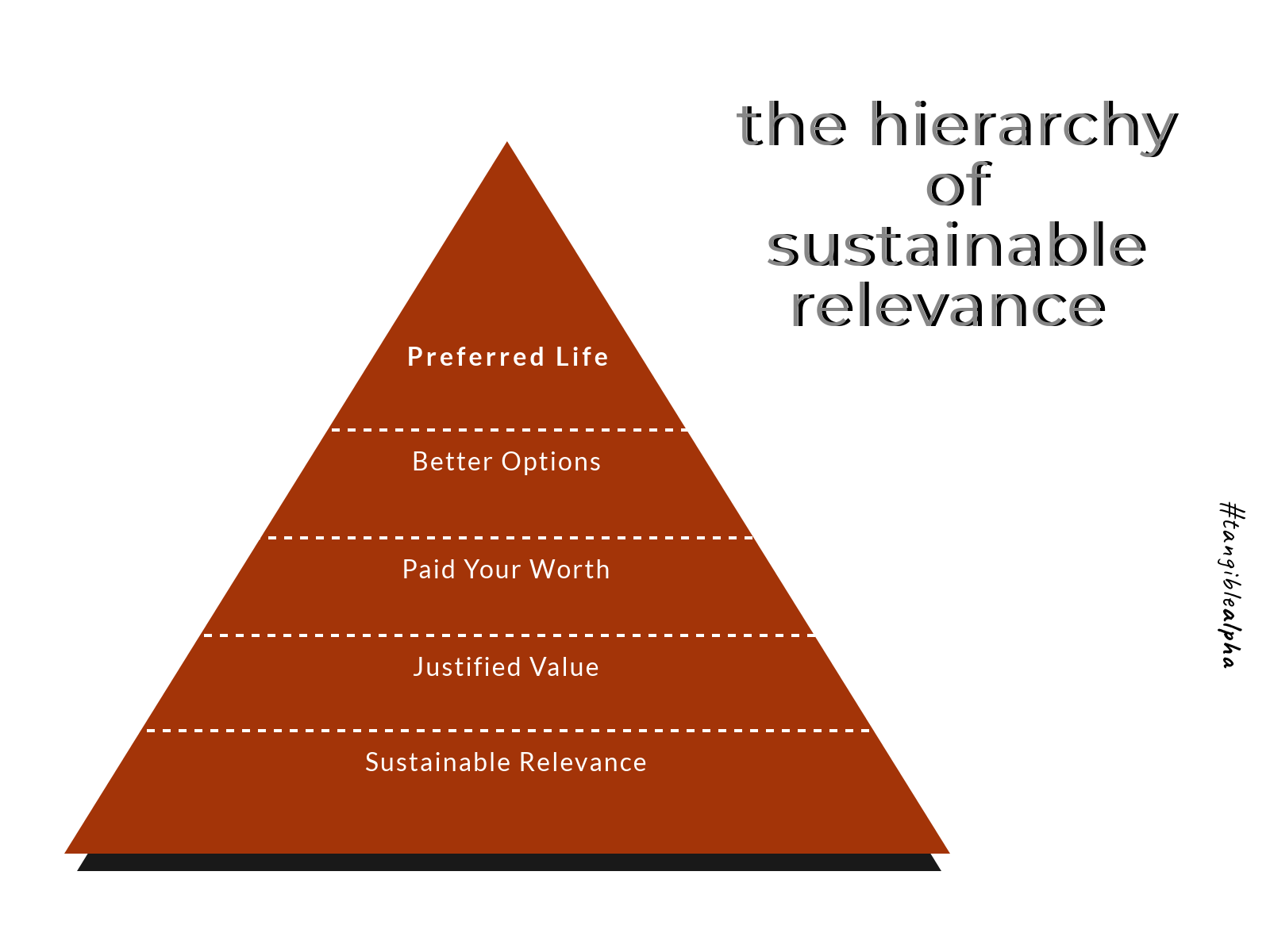
Most advisors have never been afforded the opportunity to discover and define their authentic relevant value… they were hired to sell products. To remain relevant and become irreplaceable advisors are going to have to think differently about their job description. You are going to have to think differently about sales… you are going to have to think differently about service… you are going to have to think differently about your unique value.

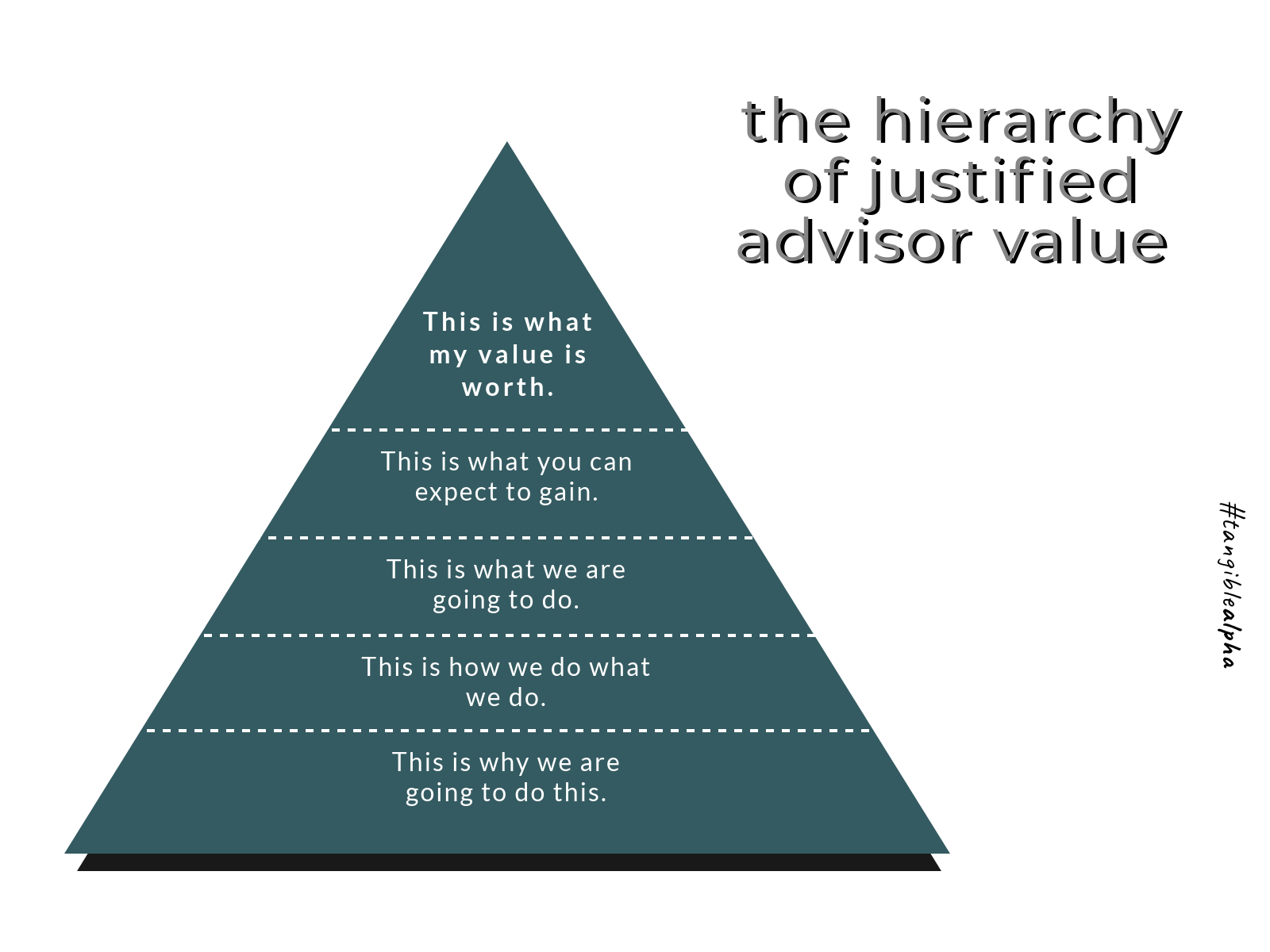
  • You can’t have a conversation about the solutions you provide without the courage of your conviction.

  • The courage of your conviction comes from well defined value…

The conversations of most advisors, up until recently, have been centered around either products or the trustworthiness of their firm. But now, the greatest opportunity in the history of financial services awaits you…


Owning The Words That Define Your Value

By owning your value you are creating opportunities to have conversations that matter 24/7

In order to engage in conversations that matter you must have a formalized process in place in which the client experience is never left to question. Your business must become designed to exude your value and leverage all of your resources to consistently improve your client experience while simultaneously engaging in (and improving) the conversations that matter. Essentially, the client experience and the conversations that matter dovetail to enhance the overall  development of your business. Owning your Advisor Alpha creates this opportunity.

Once you define your value… you own your Advisor Alpha

Owning your Advisor Alpha and making it tangible nullifies the element of desperation inherent in a business where you can’t exude your value.

Lacking the courage of your conviction to have conversations of your value is the number one killer of all advisor client relationships… If you can’t put into words why your clients should be paying you, you will neglect them… and neglecting your clients is still the reigning champ of client defection.

They need to feel it… and you need to know how it makes them feel… Tangible Alpha.

If you don’t own the words that define your value you will be destined to attempt to become a version of “all things to all people.” This version of you fails eventually… and this version of you fails more rapidly in a robo-world.


Not owning your value will be the number one reason behind your failure… hourly, daily, monthly failures will ensue… and eventually, not owning your value will be the end of your advisory business.


You must first own your value before you can engage in conversations that matter.

Owning the words that define your value enable you to create a business in which your conversations fuel the client experience and the client experience fuels the conversations that matter. Owning your Advisor Alpha and making it tangible will drive the success of your business in the future… by design. 

Ponder This…

How can you escape the trap of client defection due to advisor neglect? How can you empower all trusted partners to have conversations with the courage of their conviction? How will you remain relevant and become irreplaceable


Topics Must Be Defined

My Topics

McKinsey: Time to Manage Behavior, Not Just Portfolios

Big Data Kills

Curated Article Commentary

by Grant Barger

The big data that gets reported from McKinsey has very little to do with the success or failure of your business as an entrepreneurial financial professional.

The title of this curated article (below) has it right, but the content of the article gets it wrong. This is digital noise. 


Read The Curated Archived Story Here

McKinsey: Time to Manage Behavior, Not Just Portfolios

The low-hanging fruits in financial markets leading to easy investment profits are well picked over. Now advisors need to focus on blocking and tackling – the basics of wealth management.

At least that’s the insight many FAs glean from the latest market warnings from McKinsey & Co. After a fairly “stellar” era of investment performance across broad stock and bond asset classes over the past 30 years, the consultancy is forecasting “returns are likely to come back down to earth over the next 20 years.”

“Although we’re not necessarily in agreement with all of their numbers, we think that this latest market forecast by McKinsey is spot-on,” says Andy Kapyrin, a partner at RegentAtlantic in Morristown, N.J., which manages about $3 billion.

Still, Kapyrin is finding rather limited remedies in terms of portfolio moves. He’s tilting some clients towards small-cap domestic stocks and emerging markets. But only on the edges, he adds, making sure not to expose investors to greater portfolio volatility than they’re likely to feel comfortable accepting over time.

“A more fundamental solution we’re finding is to re-assess a common concern we’re hearing these days – that lower returns will leave couples short in meeting their retirement goals,” says Kapyrin.

So his staff has been analyzing spending patterns of the independent RIA’s 1,200-plus clients over longer periods. Supported by outside research from JPMorgan, among others, Kapyrin’s starting to share with his clients a reassuring message: Even in less rosy economic times, retirement might not be as scary as first imagined.

While expenses might go up shortly after leaving the workforce as couples take more trips and “celebrate retirement,” Kapyrin relates that most of his clients’ golden years are characterized by moves to downsize and live more simply.

Paul Bennett
“The McKinsey study is another good reminder of the need to lower investors’ expectations over the next few decades,” he says. “But what research like this leaves out is that most retirees aren’t likely to go on any extensive spending sprees that will bust their budgets.”

Taking emotions out of the process isn’t just a matter of developing more realistic views of what a family might need to save and spend going forward, points out Paul Bennett, an advisor in Great Falls, Va., with United Capital, which manages more than $15 billion.

“I’m readdressing with our clients the need to make sure they’re not falling into certain mental traps when making choices about how best to invest,” he says.

A major bias that Bennett is urging investors to watch out for is something he calls the myopia trap – when clients become so focused on one aspect of investing that they miss the bigger picture.

It’s a behavioral trait Bennett says he tries to avert by making sure investors aren’t creating “mental silos” where they’re “fixating” on a relatively small number of holdings or accounts.

Right now, he’s also finding many clients falling into what he refers to as the “confirming evidence” trap. This, he says, is where “people tend to remember things selectively and interpret information in a biased manner.”

For example, investors might emphasize one politician’s take on economics with relative zeal. The veteran FA isn’t trying to take sides, however. “In those situations, I think it’s important as an advisor to objectively point out that they’re effectively devaluing anything that might come along in the future that contradicts those preconceived notions,” says Bennett.

A good start is to make sure clients’ goals are put into proper order, suggests Michael Liersch, head of behavioral finance at Merrill Lynch.

“It’s common for people to have very implicit ideas about money,” he says.

During times of lower market expectations, FAs must strive to become even more articulate to flush out clients’ true bucket lists, recommends Liersch.

“The challenge is to refine your interviewing process so that a family’s goals are laid out in a more quantifiable way,” he says. “As an advisor, that’s going to allow you to align clients’ investment plans and track their progress in a more definitive manner.”


By Murray Coleman 


When someone uses the phrase “blocking and tackling” and they aren’t a football coach,  you know they are dead behind the eyes. The basics of wealth management? Really? Because it’s so simple…

It’s ridiculous that financial services publications continue to equate conversations about investor behavior with lowering expectations. Conversations that matter about behavior have more to do with the actions of investors that correspond with the overall success or failure of their goals and dreams. Advisors must stop allowing themselves to be measured by the antiquated metrics of an industry that continues to publish tripe (like this) that only adds more confusion to their daily lives. Advisors must start designing the metrics that matter (to the advisor and the client).

Your Reading Filter

This article is two years old… the financial services industry has been publishing shit like this for 40 years… you can find one just like it  anywhere you turn these days. The point of this post is to help you see what you are reading… don’t just go through the motions with the same old assumptions.

Some Good Thoughts

If the words in the article are highlighted in green the concept is sound… you might think about how you might implement those words into meaningful conversations of your own.

This isn’t about destroying the author who is just doing his job by interviewing an advisor about how they do stuff. This is about rethinking the status quo. 

Think Outside The Black Box

The concept covered in the article is sound… you have to become more than a portfolio manager to add value to your clients. Holistic is a term some like to use… I don’t. You are managing Net Worth. The net worth of your valued clients requires you to get off of your ass (mentally) and be proactive about setting and maintaining expectations. If you are unable to set and maintain behavioral expectations with your ideal audience, your chances for survival in a robo-world are slim to none. It’s time for you to think outside the black box of industry defined value which is focused on ROI from capital markets… you must become more than a middle-man to your clients.

Collecting Meaningful Data

To remain relevant there is a progression you can follow that allows you to collect metrics that are germane to your existence. The progression is outlined throughout this website. Your unique data will help you thrive in a robo-world but you have to learn how to get that data in the most effective and efficient manner. Stop wasting your time on big data articles published by the industry and start discovering your own unique KPI. Then you will be able to filter through the noise (the stuff in red) with a more efficient outlook and highlight the stuff in green on your own.

Rethink your value and formulate your own plan here. 24/7


Discover Your KPI


My Advisor Data

Advisor Cookie-Cutter Content

Own The Words

Why your cookie-cutter social media posts are killing your brand and your business

The Advisor in the future must demand more independence when it comes to sharing the behavior they can promise, the experiences they have encountered and their opinions about their profession.

To remain relevant and become irreplaceable the Advisor in the future can’t continue to rely on the cookie-cutter content that (literally) every other Advisor is publishing. Your content can’t be straight off the shelf.

If you continue to post the company message masked as your Advisor Alpha, the standard by which your value is measured will be controlled by the firm (the industry) and not you… this is a fatal mistake.

You can’t afford to become known for the company catchphrase.

Your very existence depends on your ability to differentiate yourself from your competition (in-house too). You must be able to remind your clients of your authentic relevant value while at the same time exuding your Alpha for ideal prospects to discover. This is a 24/7 endeavor.

You can’t continue to rely on industry standards to deliver your Alpha for this simple reason… your clients and prospects will never be able to differentiate you from your competition (Price becomes an issue in the absence of value).

In A Robo-World

In the digital age of transparency and in the era of the 24 hour client experience it is critical that your value is distinguishable as being special. This is your livelihood… if you get complacent with your reputation by trusting the industry to define your value then you will be replaced by the industry.

If they need you more than you need them you are irreplaceable. If you need them more than they need you you are replaceable.

You can make your Advisor Alpha tangible regardless of where your desk sits

If you can’t publish your beliefs about the industry, document your experience and make statements about the behavior you can promise then you will be replaced.

You must become known for the quality of your curiosity... This is about more than asking clients great questions… this includes asking your firm questions about compliance and the parameters of your business as it pertains to your brand. Don’t leave your reputation in the hands of others to define… Own the words, own your Alpha, own your brand and own your destiny.


Content That Matters

Own Your Destiny

24/7 Feedback in a Robo-World

Metrics That Matter

Feedback is Happening 24/7

Your Metrics

  • In a digital omnichannel world, feedback is happening 24/7 with likes, comments, DM’s, social shares, etc…

  • It feels like there is a new way to give and receive digital feedback every day. 

  • In order to gather the metrics that move your business you must be able to ask great questions and get honest responses. 

  • Your clients must give you honest feedback to become trusted partners… you need trusted partners as clients to survive and thrive in a robo world. 

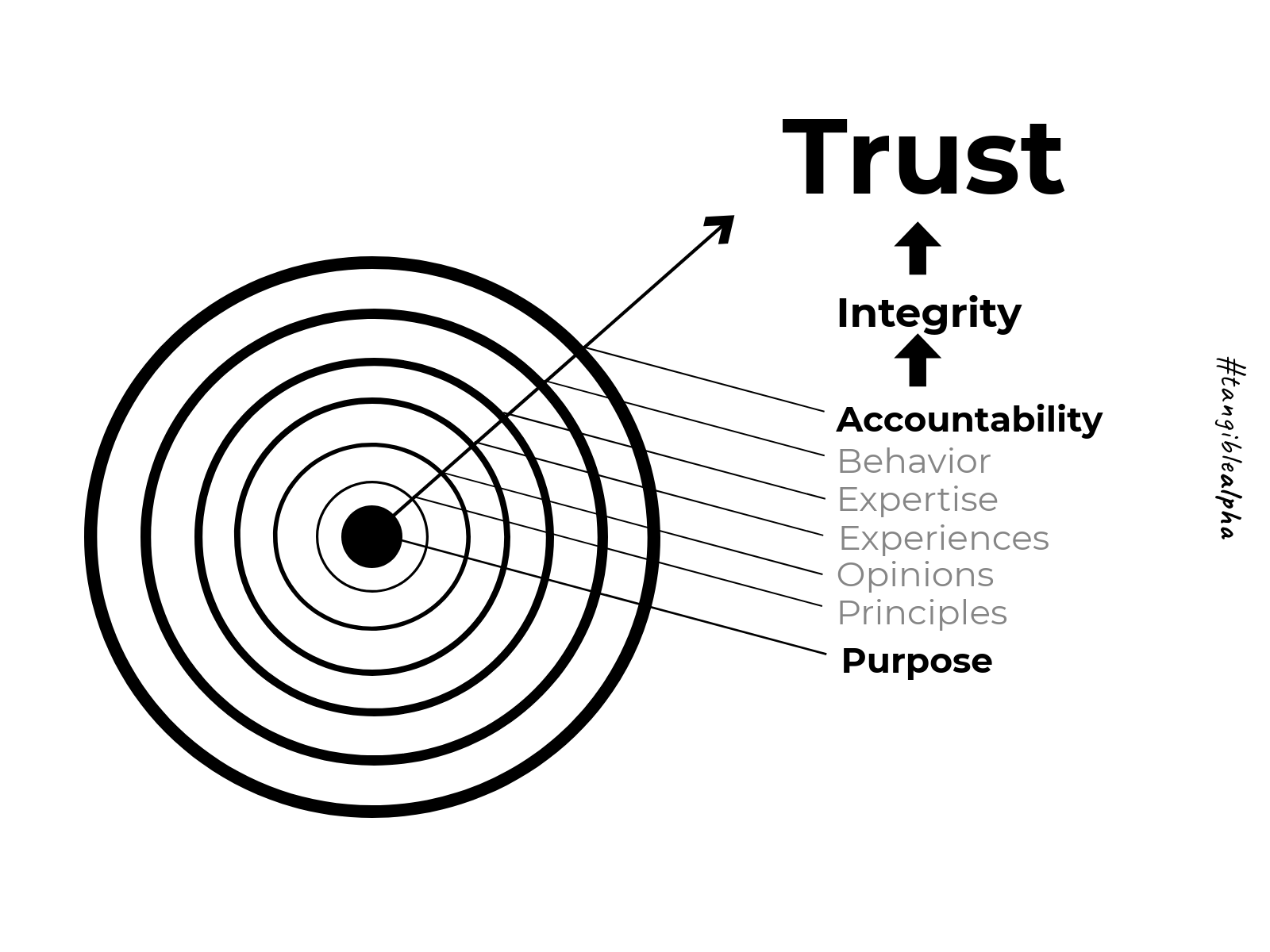
To cultivate trust in a digitally transparent world, simply follow the Infinite Advisor Alpha Progression.

Get and Keep Ideal Clients

Earning Trust in a Robo-World

In the Future…

How will financial advisors get and keep ideal clients?

This is a walk-through for the first six micro-learning modules of Infinite Advisor Alpha

  1. Purpose  You must lead with a client centered purpose to remain relevant in the digital age.
  2. Principles  Your principles must be documented to create tangible accountability in a robo-world.
  3. Opinions  You must distinguish your authority as a trusted source of wisdom.
  4. Experiences  Creating tangible touch-points, that your clients and ideal prospects can associate with, is imperative for your survival.
  5. Expertise  Your expertise must be defined by you… in words that your ideal audience can understand and appreciate.
  6. Behavior  You can’t promise returns… you must promise your behavior to survive in a robo-world.


Building a solid foundation of trust is a two-way street in the digital era of financial services. Not only must you convey your wisdom and integrity 24/7… but your digital marketing campaigns must be relied upon to filter in ideal trusted, like-minded prospects… while simultaneously reminding your current clientele of your unique authentic value… 24/7.

If you are a returning advisor, this should encourage you to keep moving down the right path…

If you haven’t taken the plunge, please feel free to dip a toe into our pool of wisdom. Our sole purpose is to help good people get better… every day.

Enjoy the journey,

Grant