Setting Your Rules
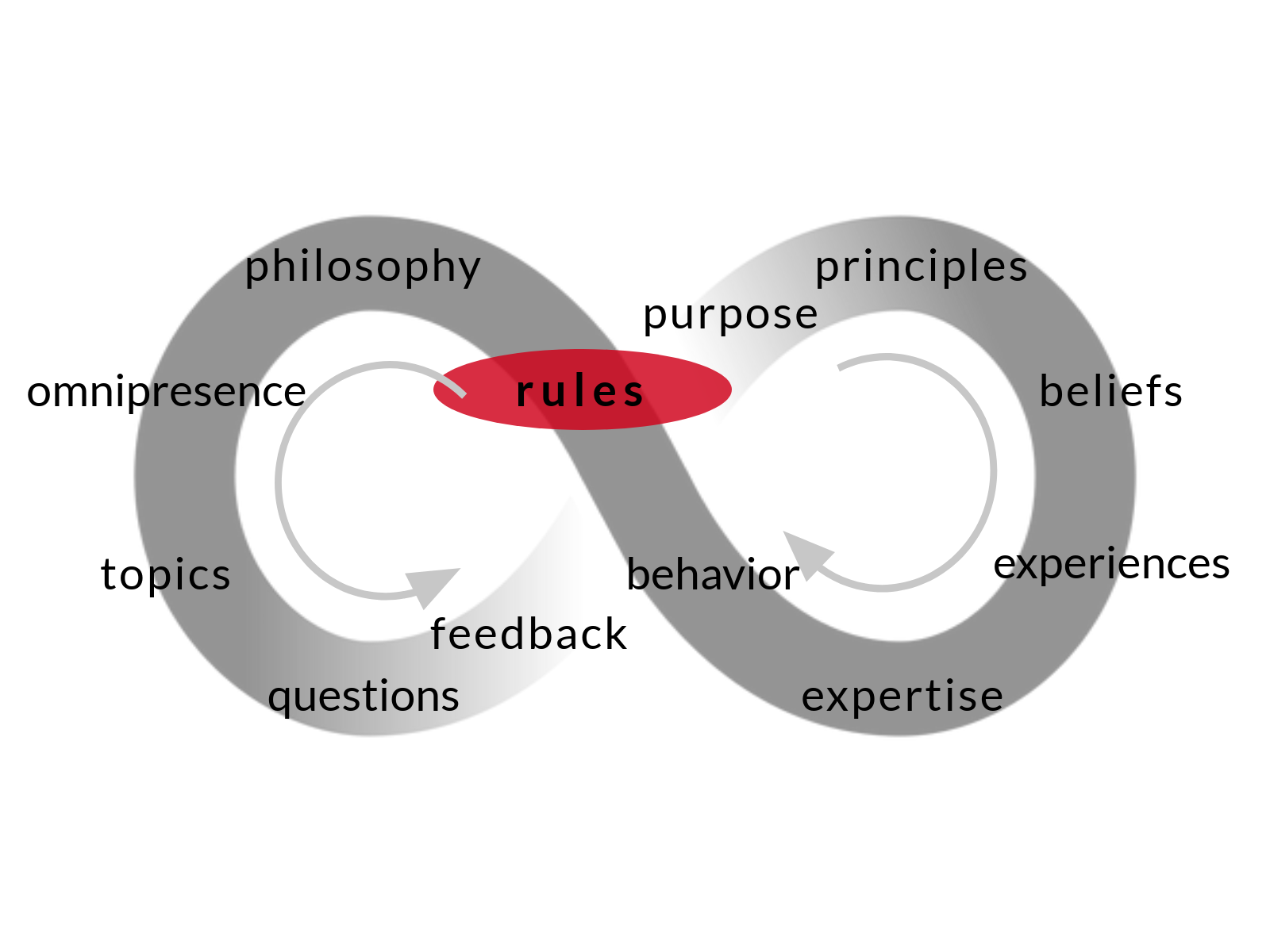
Your rules of engagement can be set by you after you are able to promise your behavior… follow the progression of Infinite Advisor Alpha to become and stay relevant in the new digitally transparent ecosystem of financial services.

Last week in Newport, Rhode Island I was reminded of what a healthy and robust economy we’re currently living in.
On a quiet Tuesday night, the restaurant we dined at, The Mooring, was anything but quiet. There wasn’t an empty seat in the place. We saw tables turned over multiple times and a constant lineup of eager diners with no reservations anxiously hoping a spot would open for them.
Nearly every great restaurant was experiencing the same. In fact, if a business didn’t have this type of demand, we could make an argument they were likely doing something wrong. As one person at my meeting said, “It’s almost hard to NOT to succeed in this market.”
That restaurant reminded me of one of the “classic” questions from the marketing world: If I were to ask you, what’s the single most valuable competitive advantage a company can have, what would you say?
Some would answer by saying money, or proprietary technology, or a monopoly.
The late Gary Halbert, a famous, contrarian direct response copywriter often wrote that the single most important competitive advantage any business could have was a “starving crowd.”
Halbert argued that the only competitive advantage you needed was an audience, hungry and salivating for your products and services. These restaurants were getting it right.
I love Gary and have often talked about him in my Tidbits, podcast, and while working with clients.
But in this case, Gary was wrong.
Sure, a metaphorically hungry, starving crowd is important, and many businesses have done a fantastic job cultivating that type of audience, but what about the rest of the companies out there?
What about companies facing industry-wide disruption from the Amazons of the world?
My friend and colleague, Colleen Francis, who consults for some of the biggest firms in the Fortune 100 suggested the single biggest threat she sees all clients facing, in nearly every sector, is literally Amazon.
She calls the phenomenon the “Amazonification of Sales.” Colleen says that clients in every sector and every industry now expect the Amazon experience. They’re going online and price shopping. They expect fast turnaround times and speedy delivery. And they expect it, regardless of what you’re selling – even if you’re selling a 2 billion dollar piece of heavy manufacturing equipment, or making a multi-million dollar licensing sale.
I see this outside the Fortune 100 and in my privately-held midmarket clients all the time. They’re all facing customers and clients with exceedingly increased expectations almost solely because of their experiences with Amazon.
And this is why Gary was wrong. The single most important competitive advantage a business has isn’t a starving crowd.
It’s the ability and willingness to change.
It’s getting harder and harder to win with “what got you here.” The strategies and successes of your past can, if you’re not careful, create your downfall. (Consider Blockbuster passing up on buying Netflix).
As one of my colleagues said last week which I thought was brilliant, “If it can happen to #generalelectric, it can happen to you. Nobody is immune.”
So here’s a question for you to consider.
Are you experimenting with enough change?
None of us have even a smidgen of the resources available to Amazon, but it doesn’t mean we can’t be changing at a similar speed.
For example, Amazon, Google, Apple and others are famously known in business circles for innovating through small teams and constant micro-experiments running all the time.
What experiments are you running in your business?
What processes are you engaged in changing or improving?
What can you change about your sales process, your customer experience, your decision-making process, etc?
There’s enormous pressure in the business world to optimize for results today. But the magic lies in optimizing for today while innovating for tomorrow. Excellent management can balance those objectives carefully.
Your Challenge For The Week: Devise a low-risk experiment you can run for a short time and share it with me.
Here are a few examples.
If you’re a VP of Sales, consider a new step or reducing steps in your sales process.
If you’re in charge of #customerservice, devise a new way of handling complaints, criticism, and feedback.
If you’re in charge of #customerexperience, consider testing something new as part of the customer’s post-purchase experience, or try testing a new way of caring for customers in a retail environment.
If you often launch new products into the market, try pre-selling those products before launching them.
The key is to make your experiments low-risk, and low-stakes, but enough to help you change, pivot, adapt, remain relevant, and thrive well into the future.
As a bonus challenge: Ask all your subordinates (VP Sales, CMO, CFO, etc.) to make a list of all the processes, tasks, and repetitive things the company does on a regular basis. If you asked why they’re done in a certain way, and the response is, “Well, that’s the way we’ve always done it….”
Start there.


Your ideal audience is looking for solutions to their problems 24/7.
It is absolutely critical that they are able to find you and your brand across a multitude of mediums in the digital world. They must be able to access your tangible value 24/7 from their device of choice. Most likely, this will be the smartphone.
Twitter is ideal for staying relevant if you use it with wisdom…
Your purpose, values, principles, beliefs, opinions, experiences, expertise, promises, rules, philosophy, and distinctive questions must all be accessible to your ideal clients and prospects.
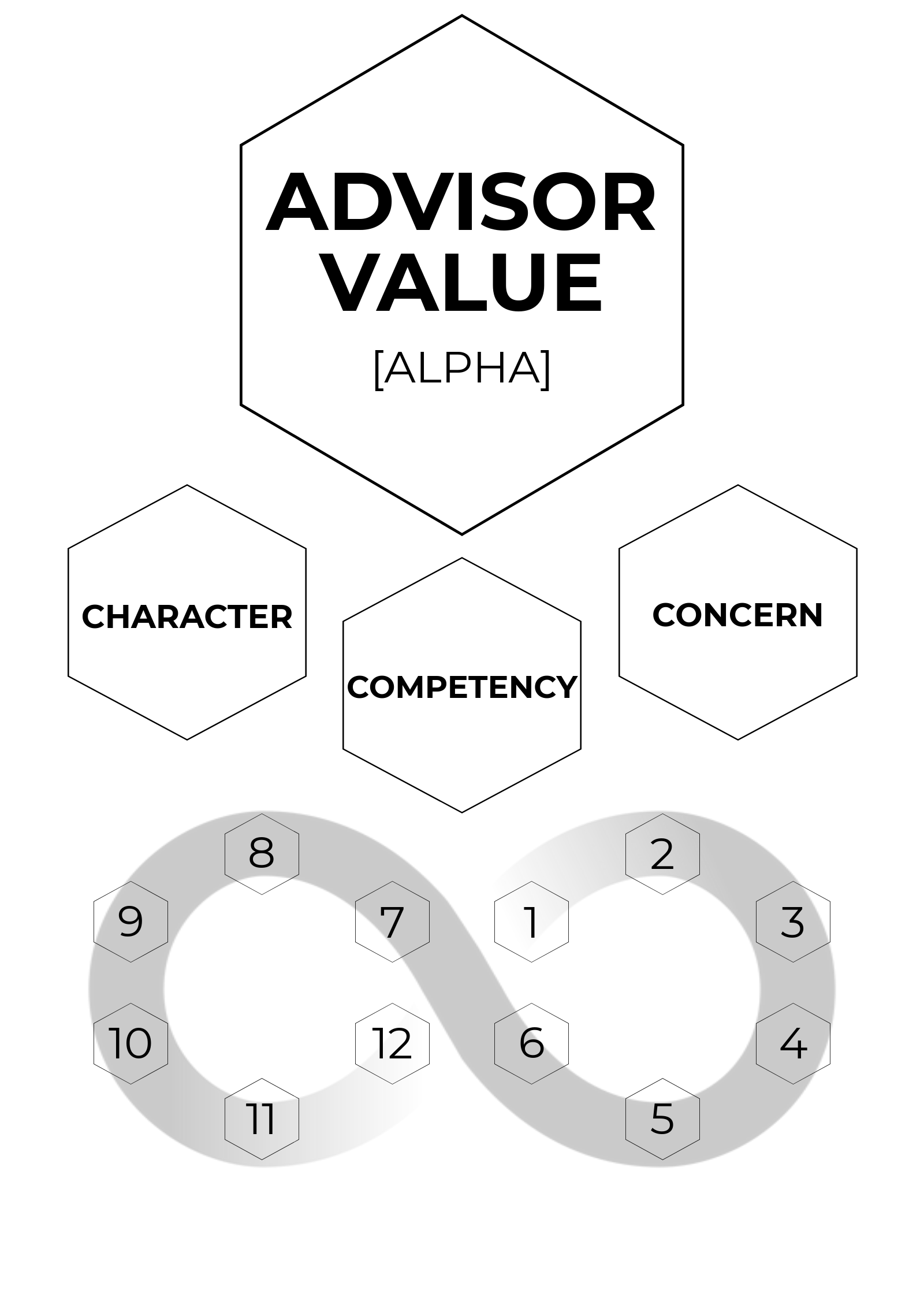
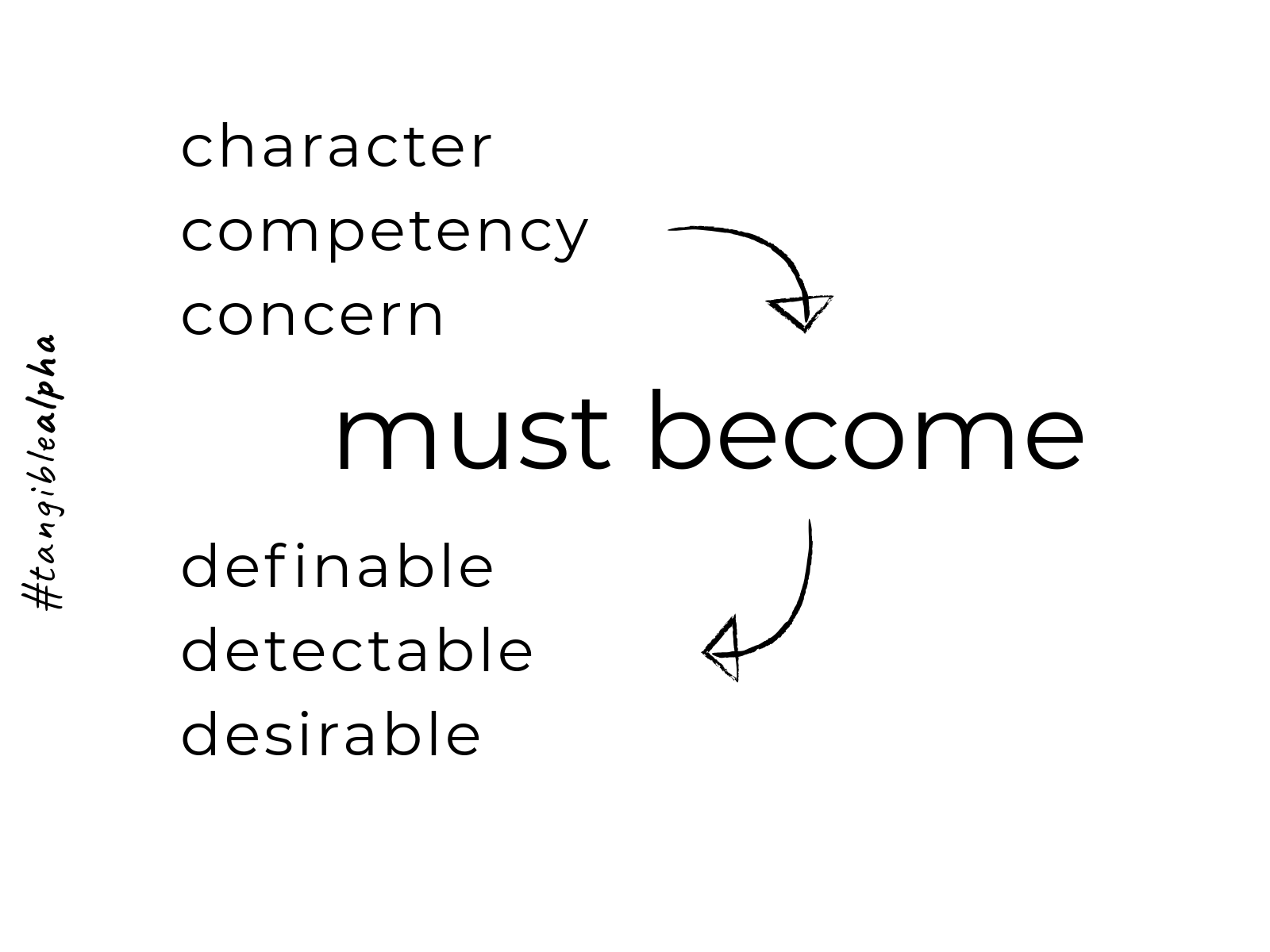
The fundamental truths about advisor alpha (value) and how they got to be the way that they are today can all be found right here at TangibleAlpha.com. In order to demonstrate your value in a tangible fashion for digital consumption, you must define your own “Laws” of investing and wealth management for your clients (and prospects) to see, hear, read, and feel. Your Laws must become more than visible… they must elicit a feeling in the hearts and minds of your audience. This must be available 24/7. Your content has to move your ideal audience to action every day. The action can be to do nothing, give feedback, stay with you as a client, or move their assets to your firm.
5/12
The Law of Digital Trust
The Law of Digital Trust

→SUMMARY
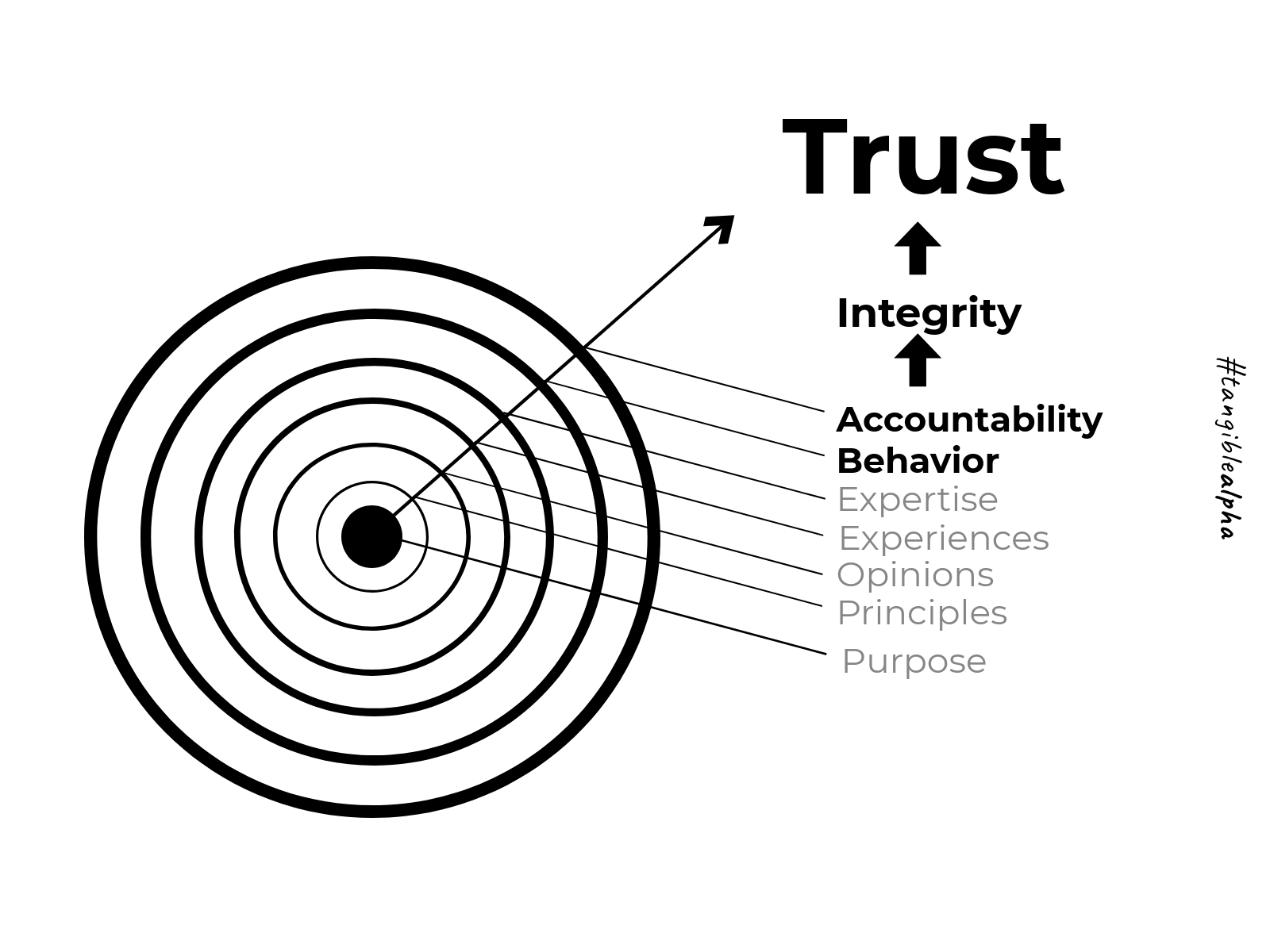
Earning trust in the digital age of transparency requires a shared purpose that is supported by promised behavior.
→OVERVIEW
The Law of Digital Trust has been derived from self-evident criteria required to build lasting trusted relationships. In the digital age of transparency it is critical to ramp up the process of collaborative trust and this can be accomplished by stating your client-centered purpose, publishing your principles, and promising your behavior.